

When To Analyse & When To Play
 5 min read
Taking inspiration from ten rules for artists, let's talk about when it's good to analyse and when it's good to play!
Saw this recently (it maybe did the rounds on socials? I don't know where I see things any more) and I loved all the points it makes.
Below are 10 rules devised by Corita Kent who led the art department at Immaculate Heart College in the 1960s. They're all great, thought provoking, and inspiring suggestions for any creative.
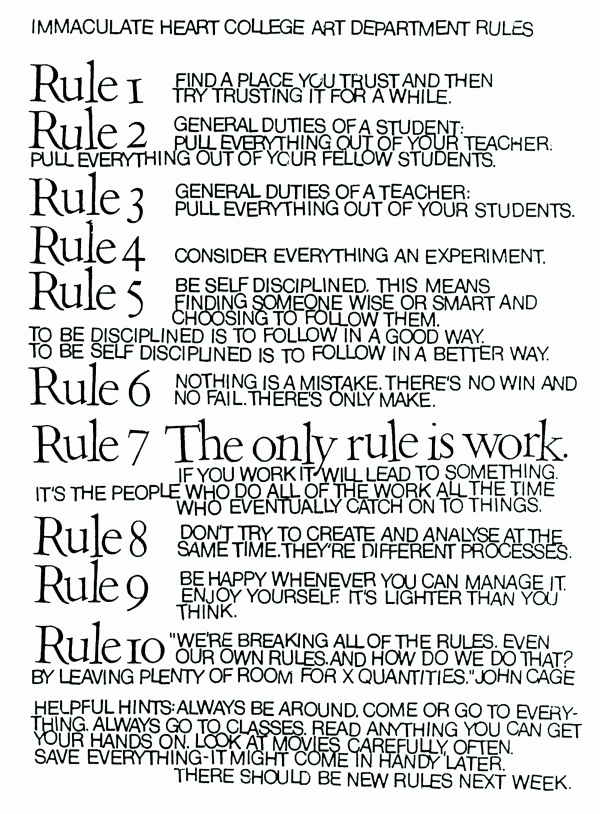
Immaculate Heart College Art Department Rules
But, today I'm mostly interested in talking about Rule 8:
“Don't try to create and analyse at the same time. They're different processes.”
As I said, there's lots of great stuff in here: “Everything is an experiment.” “Nothing is a mistake.” And that typeface and linespacing are hypnotic! We could talk about it all for days... but, for now, back to rule 8.
“Don't try and create and analyse at the same time” is a great motto to have in your head as an improviser. We know it's bad to analyse ourselves whilst we perform, and even have our own term for it: you will probably have heard someone say “I was really in my head” when they felt stuck in a scene.
What I particularly like about rule 8, though, is that it acknowledges the need for analysis and its connection to creation.
I'm a big believer in analysis being crucial to your development as an improviser (“Wait, this guy who insists on writing blogs about improv is actually pretty into analysis!? What the hell???” you are thinking to yourself). Here, rule 8 is not trying to say that you shouldn't analyse, only that you shouldn't do it simultaneously with creation.
Some great improv advice is all about encouraging you to “get out of your head” and to help get into your body, emotion, and your playfulness. Thinking too hard (analysing) can lead to fear and a lack of action when what we want is play and creation. But the risk is that people can interpret said improv advice to mean any attempt to analyse what is happening on stage is against the ethos of improv.
But analysis is crucial. You have to analyse to know what to improve upon; you have to take notes in order to grow. So, taking on Rule 8, the point is not to do them at the same time.
To help, let's look at when it's a good time to analyse and when it's a good time to play.
When To Analyse
- In class: that is literally why you are in the class.
- In rehearsals: try new stuff out, and try to apply notes and see how they feel.
- Receiving notes from a coach or teacher: you're analysing trying to understand how to use the feedback in your performance.
When To Play
- Before a show: any chat before you get on stage should be about positivity, being playful, and trusting each other. Analysis before a show is a huge trap, even though it's meant positively.
- During the show: you're on stage performing? Postpone judgment and make choices that help to live up to all the support you promised before the show. Try to listen and be alive to change (you know... improvise).
- After a show: when coming off stage, try and keep yourself in play mode. It can feel like you immediately want to unpack everything with your team (particularly if you didn't feel good about the show) but there is very little benefit to a disection. If you have a coach, they'll give you notes, and if you don't, keep in play mode and save analysis for the next rehearsal.
Grey Areas
There are a couple of tricky points with this. As improvisers we are uniquely writers and performers at the same time. To say that a show is done without any thought or analysis would be a bold faced lie. So let's look at a couple of grey areas.
The Backline
I watched a video of myself performing recently and there I am on the backline doing that classic chin stroking and frowning “hmmm” face. If you're on the backline in a show, then you should be playing, but you are also watching what's happening from a distance and considering your next move. So, regardless of what I say here... is it even possible for someone not to be analysing even a little bit from the back line? You're like a writer in waiting, thinking up the next step. How do we get out of that?
I think the answer is not so much that you shouldn't think, but that you shouldn't analyse. You are considering moves, how choices in this scenes affects other characters, the world, or the show. You have to be listening carefully and allowing that to affect your next choices. But you shouldn't be trying to write, fix, or control the show through analysis. Thinking on the backline should be less like you're diagnosing a problem, more like you're listening to be inspired for your next move.
In Your Own Brain
You will go back over your most recent show, rehearsal, or class in your head afterwards. Some healthy amount of consideration can be useful: what would you have done differently? Was there anything you missed?
BUT, try try try to keep this brief. Remember, you are not an objective party to your own behaviour. The point of analysis is to consider something and see how it works and how it might be improved. The point is not to be hard on yourself for not nailing every scene. Instead of over-analysing, try being kind to yourself.
So, if you're finding yourself in your head a lot at the moment, or worrying before, during, or after shows, then try to remind yourself you're likely trying to analyse and create at the same time. Give yourself permission to focus only on one or the other, based on where you are and what you need to achieve.
Analyse in class, play in shows.